
The Future of Marketplace Algorithms
Marketplace algorithms are shifting toward AI, behavior, and conversion. Learn how ranking now depends on real performance, not just keywords.
Anna Shtovbonko
4/12/20263 min read


Marketplace algorithms are becoming more advanced, more adaptive, and much more outcome-focused. In the past, product ranking was often influenced by fairly simple signals: keywords, clicks, relevance, and sometimes price. Today, AI is making those systems more intelligent and more sensitive to actual shopper behavior.
That matters because the algorithm is no longer just deciding what is listed first. It is deciding what gets seen, what gets trusted, and what gets sold.
AI ranking signals are expanding
The future of marketplace algorithms is not built on one ranking factor. It is built on a combination of signals that help the platform predict which products are most likely to satisfy the shopper.
These signals can include:
Search relevance.
Product data quality.
Click-through rate.
Add-to-cart behavior.
Purchase conversion.
Return rates.
Review sentiment.
Engagement depth.
The more AI learns, the more these signals interact with one another. A product with strong metadata but poor conversion may lose visibility. A product with fewer clicks but stronger conversion might rise. The algorithm is looking for real-world performance, not just surface-level optimization.
Behavioral data is becoming central
One of the most important changes is the growing role of behavioral data. Platforms can now observe how shoppers move through the funnel, what they hover over, what they skip, what they compare, and what they buy after considering alternatives.
That means the algorithm is learning from behavior, not just content.
For e-commerce brands, this creates a new layer of competition. It’s not enough for your product to look good on the page. It has to perform once people engage with it. If users click but don’t buy, or buy and return, the system notices.
This makes the entire shopping journey part of the ranking process.
Conversion-based ranking is becoming stronger
In the future, conversion will likely matter even more than it does today. Marketplace platforms want to surface products that create a good user experience and drive successful transactions. If a product consistently converts, it sends a strong signal that it is relevant, desirable, and trustworthy.
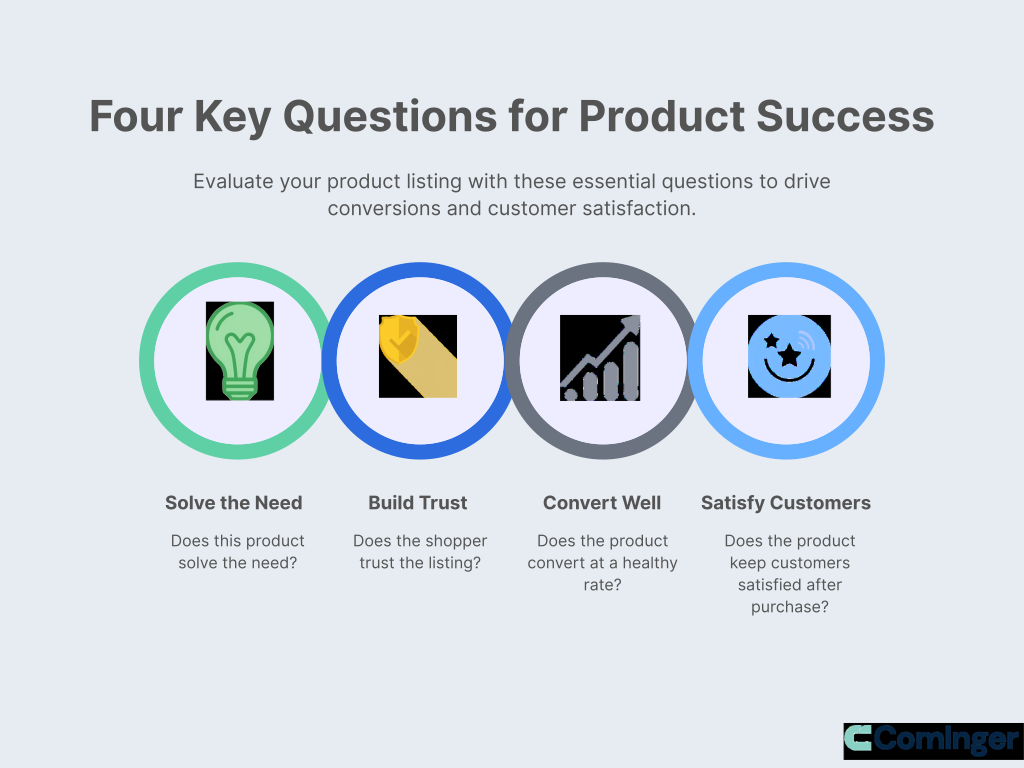
That means the algorithm is increasingly asking:
Does this product solve the need?
Does the shopper trust the listing?
Does the product convert at a healthy rate?
Does the product keep customers satisfied after purchase?
Conversion-based ranking rewards products that are not only discoverable, but also convincing.
What brands should prepare for
To stay competitive, brands need to think beyond visibility alone. They need to optimize for the full algorithmic journey, from discovery to conversion to retention.
That means focusing on:
Better product pages.
Stronger images and content.
Clearer value propositions.
Faster load times and easier navigation.
More accurate expectations around shipping, fit, quality, and use.
The marketplace algorithm of the future will likely reward brands that reduce friction and increase satisfaction.
A new era of ranking
Marketplace algorithms used to feel static. You optimized, ranked, and hoped the traffic came in. Now they are dynamic systems that react to behavior in real time and constantly learn from the results.
That is both a challenge and an opportunity. It means brands can no longer rely on old tactics alone. But it also means there is more room to win if you understand how the system thinks.
The future of marketplace algorithms is not just about search. It is about prediction, behavior, and conversion. And that changes everything.