
The New Marketplace Ranking Formula: What Really Drives Rankings
Learn how conversion rate, fulfillment performance, product data quality, and reviews shape marketplace ranking in 2026
Anna Shtovbonko
4/18/20262 min read


For a long time, marketplace sellers thought ranking was mostly about keywords, bids, and getting enough traffic. That was never the full story, but it was close enough for a while. Now the ranking formula is much more complex. Marketplaces are paying attention not just to visibility, but to whether a product actually performs after people see it.
That shift matters because it changes how sellers should think about growth. Ranking is no longer a static game of optimization. It’s a live system that responds to conversion, fulfillment, data quality, and customer satisfaction.
Conversion rate signals matter more than ever
One of the strongest signals in modern marketplace ranking is conversion rate. If shoppers click a product and buy it, the platform learns that the listing is relevant and effective. If they click and leave, the signal is weaker.
This means your listing has to do more than attract traffic. It has to close the sale.
Conversion rate is influenced by several factors:
Main image quality.
Title clarity.
Price competitiveness.
Review strength.
Product detail quality.
Trust signals like returns and shipping information.
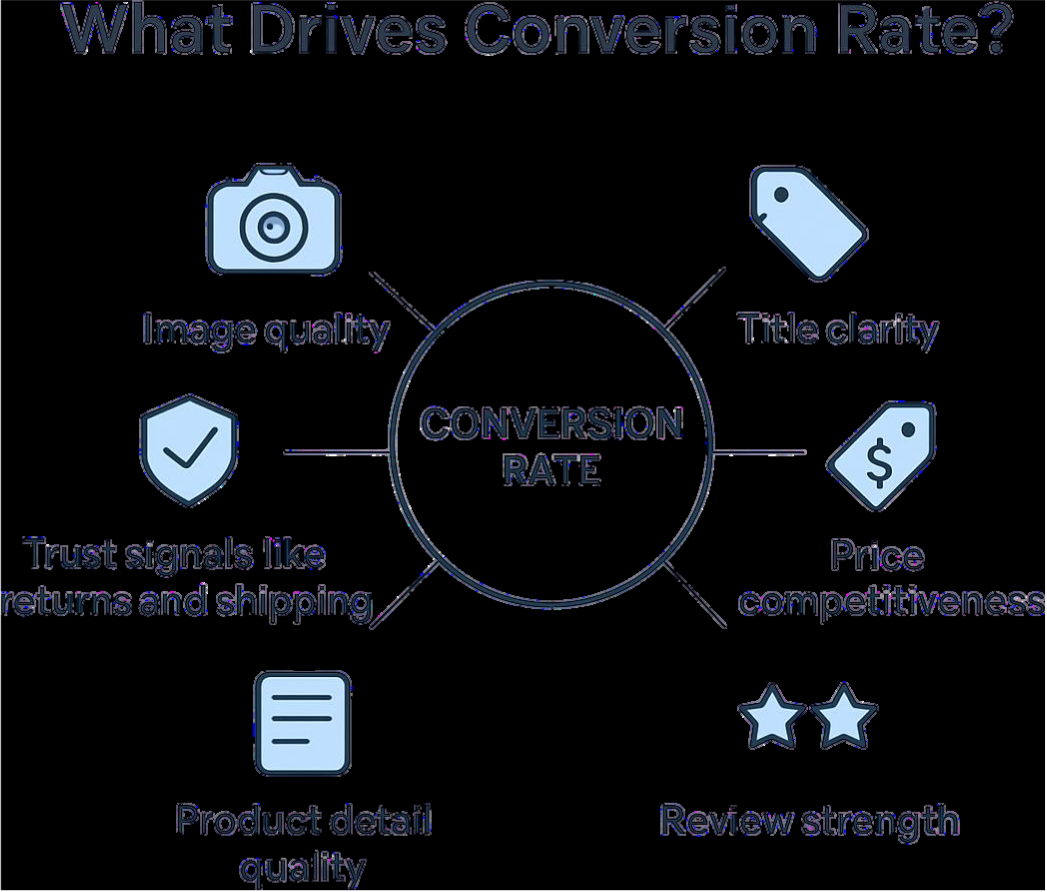
When these elements work together, the product becomes easier to rank because the platform sees strong buyer response.
Fulfillment performance affects visibility
A great product listing can still struggle if fulfillment is unreliable. Fast shipping, low defect rates, accurate inventory, and consistent delivery performance all influence how marketplaces judge a seller.
From the platform’s point of view, fulfillment is part of the customer experience. If products arrive late or inventory runs out too often, the marketplace loses trust in that seller’s ability to serve demand.
This is why operational performance and search performance are connected. You can’t scale ranking if the backend cannot support the front end.
Product data quality is part of the formula
Bad product data creates friction everywhere. It confuses shoppers, weakens search relevance, and lowers conversion. Clean product data, on the other hand, gives the platform a better understanding of what the product is and who it is for.
That includes:
Accurate titles.
Complete attributes.
Clear descriptions.
Correct category placement.
Consistent variant structure.
The better the product data, the easier it is for the marketplace to rank the item correctly.
Reviews are still powerful
Reviews continue to play a major role in ranking because they combine trust and performance. A product with strong reviews tells the platform that buyers are satisfied and that the listing delivers on its promise.
But reviews are not just a star rating. Platforms also look at review volume, recency, sentiment, and whether customer complaints are being repeated. That means product quality and customer expectations have to be aligned.
If the product disappoints, the ranking will eventually reflect that.
The new formula
The new marketplace ranking formula is not about one trick or one metric. It’s about the relationship between visibility and performance.
If I had to simplify it, I’d describe it like this:
Ranking = relevance + conversion + fulfillment + trust
That formula rewards sellers who build strong systems, not just strong listings.
For marketplace brands, this is the real opportunity. If you can improve the entire customer journey, the ranking tends to follow.