
Why Product Data Is the Most Underrated Growth Lever in E-commerce?
Discover how taxonomy optimization, structured attributes, and catalog quality improve discoverability and e-commerce growth.
Anna Shtovbonko
4/19/20262 min read


In e-commerce, people often talk about paid ads, creative, pricing, and promotions. Those things matter. But one of the most underestimated growth levers is product data. In many businesses, it sits quietly in the background while everyone focuses on traffic. Yet product data often determines whether that traffic converts, scales, and stays profitable.
From my perspective, product data is one of the clearest examples of an operational detail that becomes a growth strategy.
Taxonomy optimization shapes discoverability
Taxonomy is basically the structure that organizes products into categories, subcategories, and groups. When taxonomy is weak, products end up in the wrong place or get buried inside broad, messy collections.
That hurts growth because shoppers and marketplace algorithms rely on structure to understand what the product is.
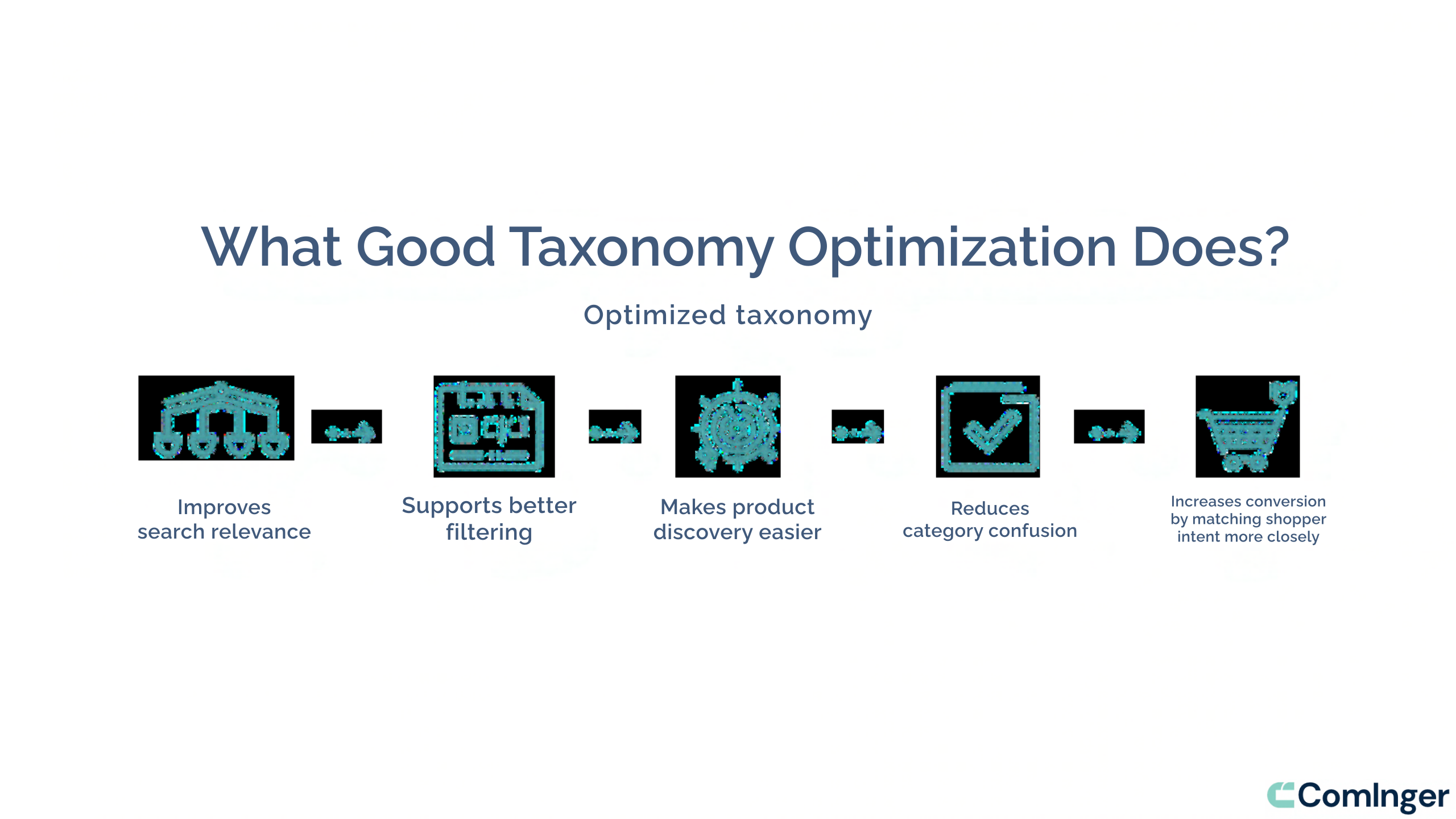
If a product is in the wrong category, it may never reach the right customer, even if the product itself is strong.
Structured attributes create clarity
Structured attributes are one of the most valuable parts of product data because they give platforms and shoppers specific information in a format that can actually be used.
Examples include:
Size.
Material.
Color.
Fit.
Gender.
Skin type.
Use case.
Compatibility.
These details matter because they allow systems to match products to specific needs. A shopper may not search for a general product category anymore. They may search for a very particular use case, and structured attributes help the system understand that fit.
Without structured attributes, even a good product can become hard to find.
Catalog quality affects performance
Catalog quality is about consistency, completeness, and accuracy across the whole product range. A messy catalog creates friction at every level. Search becomes weaker. Filters become unreliable. Ads underperform. Merchandising gets harder. Conversion drops.
A high-quality catalog supports growth because it reduces confusion and increases confidence.
Some signs of good catalog quality:
No duplicate or conflicting products.
Clear naming conventions.
Complete descriptions.
Updated pricing and inventory.
Consistent image standards.
Clean variant logic.
When the catalog is organized, every channel performs better.
Why this matters for scaling
A lot of teams try to scale by adding more traffic to a weak system. That usually just makes the problems bigger. If product data is poor, more traffic doesn’t solve the issue. It exposes it.
Strong product data, on the other hand, makes scaling easier because it improves:
Search visibility.
Marketplace ranking.
Ad efficiency.
Customer experience.
Conversion performance.
This is why I see product data as a growth lever, not just a maintenance task.
The real opportunity
The businesses that win in e-commerce are not always the ones with the biggest budgets. They are often the ones with the clearest data.
Product data gives structure to the customer journey. It helps platforms understand the product, helps shoppers understand the offer, and helps the business scale with less waste.
That is why I believe product data is one of the most underrated growth tools in e-commerce today.